
By Aislinn Ozawa Burns, MSN, PMHNP-BC
You can spend weeks reviewing medications, diagnostic criteria, and dopamine pathways and still find yourself wondering about something much more basic the night before your PMHNP boards.
Which ID do I bring? Can I take a bathroom break? Will they give me scratch paper? How soon will I know whether I passed?
Those questions deserve answers, too.
This guide walks through what to expect at a Prometric testing center for the ANCC PMHNP exam, from preparing your identification to checking your results afterward. I’ll also share what my own testing experience was like, including the supplies I received and the things I would check before going.
The goal is to leave you with fewer unknowns on exam morning. You want your mental energy going toward the questions, not figuring out the check-in process.
Updated September 2026. This guide focuses on the ANCC PMHNP-BC exam at an in-person Prometric testing center. Always review your current appointment instructions and the ANCC requirements before testing; other certification programs may have different rules.
How Long Is the ANCC PMHNP Exam?
The ANCC PMHNP board exam contains 175 questions, and you have 3.5 hours—210 minutes—to complete it. Of those questions, 150 are scored and 25 are unscored pretest questions.
Plan to answer all 175. Don’t spend your exam trying to guess which questions might not count.
You should also allow time around the actual exam for arriving, checking in, following the computer instructions, and checking out. I would avoid scheduling anything immediately afterward that makes you feel rushed to finish.
If you are still sorting out what those questions cover, my guide to the five ANCC PMHNP exam domains explains how the exam content is organized.
Before Exam Day: Get the Logistics Out of the Way
There are two different parts of preparing for the PMHNP boards: learning the material and making sure you can walk into the testing center without an avoidable problem.
Try to handle the second part early.
Confirm Your Actual Testing Appointment
Your authorization to test is not the same thing as a scheduled appointment.
Prometric’s ANCC page provides the options to schedule, confirm, reschedule, or cancel an exam. You will need the eligibility information provided in your approval email when scheduling.
Before exam day, pull up your appointment confirmation and double-check the date, time, address, and name attached to the appointment.
Save the confirmation somewhere you can find it easily. Don’t make yourself search through weeks of emails while standing in the parking lot.
Check the Route and Parking
If the testing center is reasonably close, I recommend visiting beforehand.

You don’t need a full rehearsal. Just figure out where the building is, which entrance to use, where to park, and whether anything about the location is confusing.
When a visit isn’t practical, look up the route and building details in advance. Give yourself extra time rather than assuming the drive will go perfectly.
This is not the morning to discover that the parking garage entrance is on a different street.
Arrange Testing Accommodations Before Scheduling
If you need testing accommodations, start that process early.
ANCC requires candidates to complete the certification application before requesting accommodations and to wait for approval before scheduling the testing appointment. Accommodations cannot simply be added to an existing appointment. Supporting documentation is required.
Don’t assume this can be worked out with the front desk on exam morning.
For the content side of preparation, my 8-week PMHNP study plan breaks down how to organize your review before you reach the final few days.
What Identification Do You Need for the ANCC PMHNP Exam?
This is one detail I would verify directly rather than rely on another candidate’s checklist.
For U.S. testing, the current ANCC handbook requires one acceptable, original, unexpired ID: a U.S. driver’s license or state ID, passport, or U.S. military ID. It must include a recent photograph and signature and be in English. An official ID without a signature requires an additional signed ID. International candidates should review the separate identification requirements.
In other words, two forms of ID are not a blanket requirement for every ANCC candidate.
Your first and last names must also match your government-issued identification. Contact ANCC ahead of time about spelling errors or a legal name change.
Take your ID out and look at it before exam day. Check the expiration date and the name—not just whether it is somewhere in your wallet.
Before leaving home, recheck the ANCC Certification Handbook and your appointment instructions.
How Early Should You Arrive at Prometric?
ANCC requires arrival at least 15 minutes before your appointment.
I would aim for about 30 minutes early, or earlier if your appointment instructions say to.
That gives you room for parking, finding the entrance, using the restroom, and settling yourself before check-in.
The goal is not to spend an hour in the waiting room reviewing flashcards. It is to avoid starting an important exam already flustered because you arrived with two minutes to spare.
What Happens During Prometric Check-In?
Expect an ID check, storage for your belongings, pocket and clothing checks, an eyeglass inspection if applicable, and a metal-detector scan before entering the testing room. Security screening also applies when you return from breaks.
ANCC also lists fingerprint capture for APRN candidates.
Reading all of that can make the process sound more intimidating than it needs to be.
You don’t have to memorize the sequence. Let the staff explain what to do, follow their directions, and ask when something is unclear.
What Happens to Your Phone and Personal Belongings?
Personal electronics, including smartwatches, belong in the designated storage area rather than at your testing station.
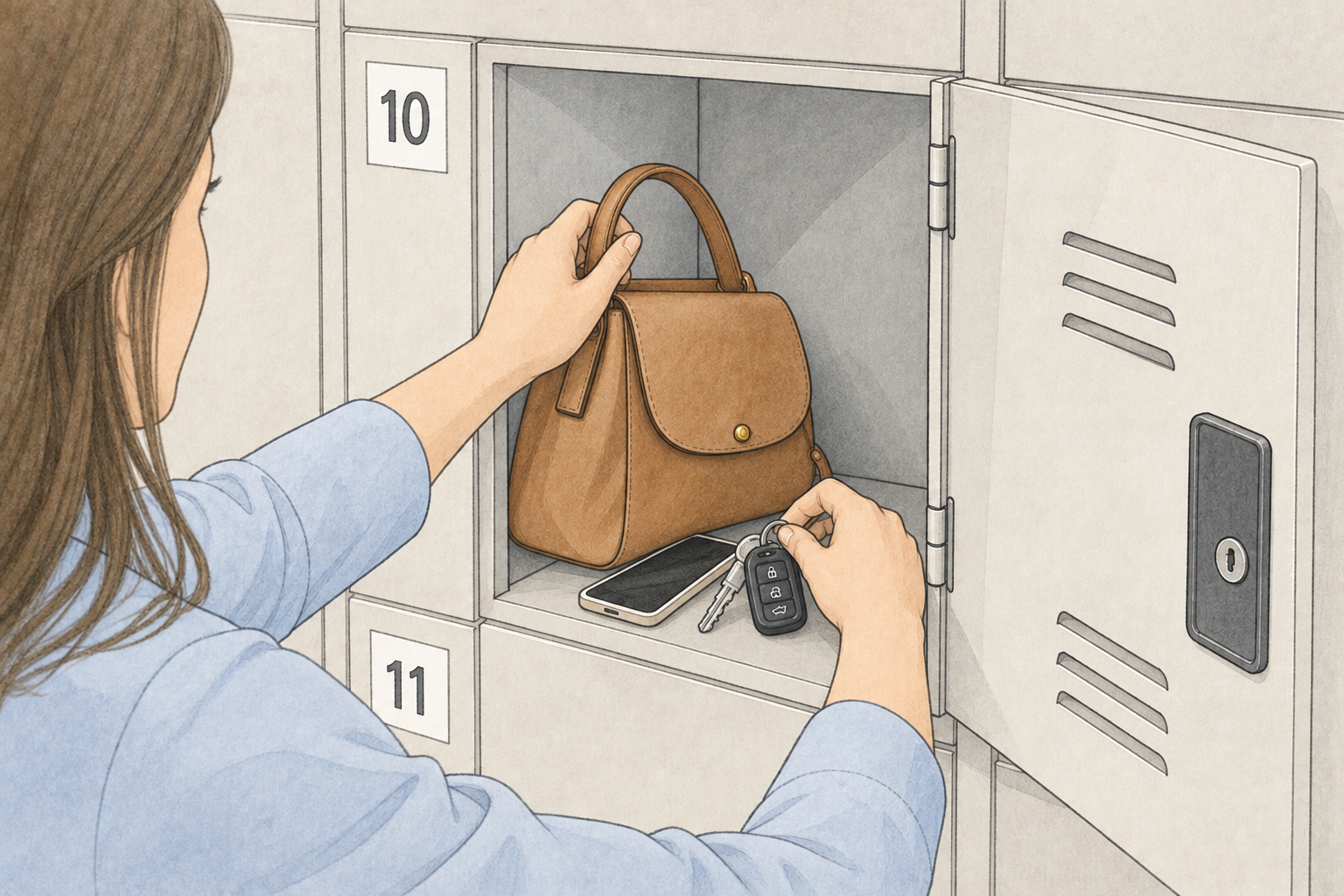
For ANCC testing, your phone and study materials are off-limits during the testing session.
I would bring as little as reasonably possible. You do not need your entire study bag beside you until the last possible second.
Before entering the room, ask what you should keep with you and how to access any permitted items during a break.
What Does the Prometric Testing Center Provide?
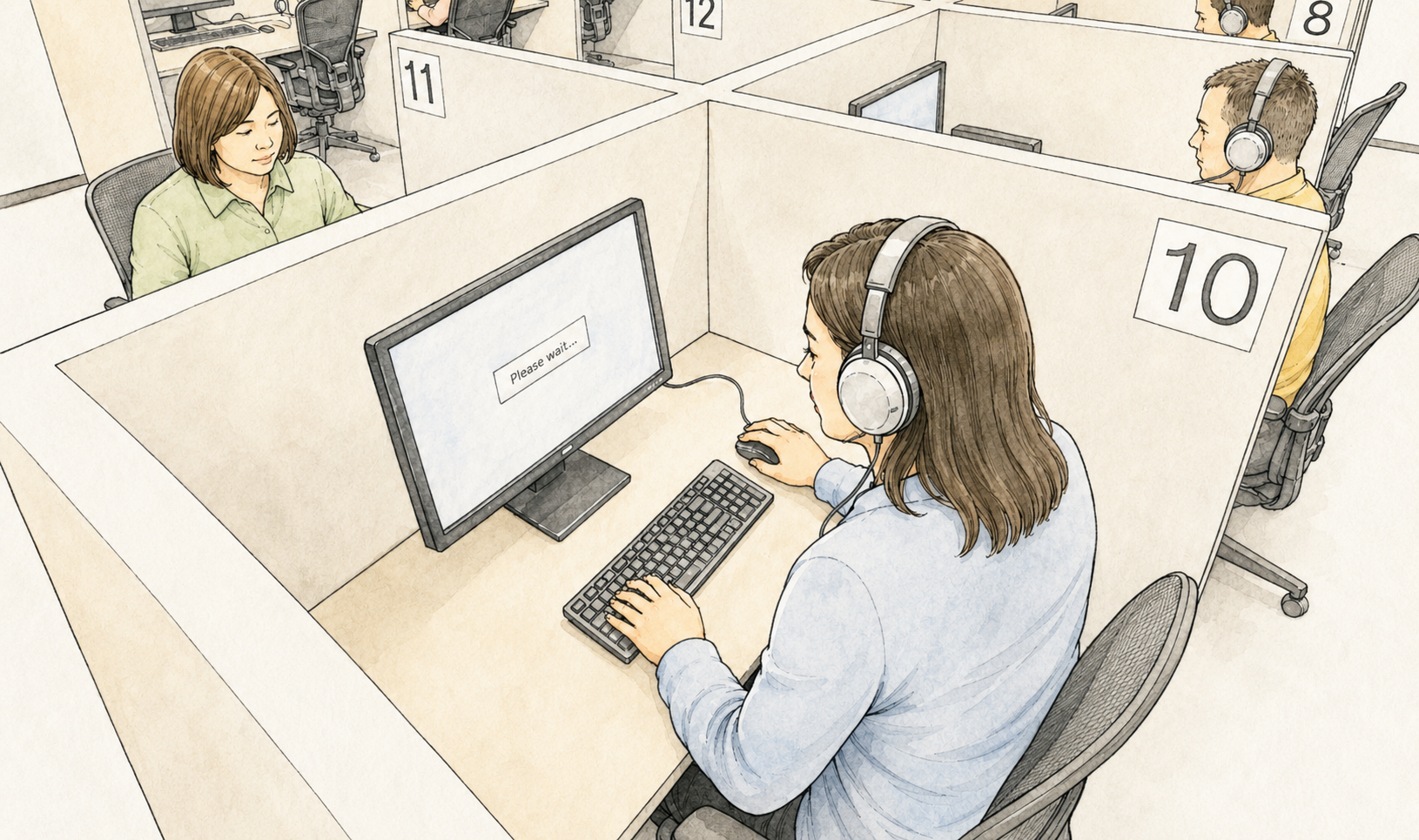
At my center, I was given two dry-erase sheets, two dry-erase markers, orange foam earplugs, and headphones.
The headphones helped block sound, but they were tight and became uncomfortable after a while.
That is my experience, not a guarantee that your workstation will have an identical setup. Prometric provides approved note-taking supplies according to the testing program.
Check the materials before getting absorbed in the exam. If something is missing or a marker is not working, let the staff know.
Can You Bring Your Own Earplugs?
Prometric’s general policies permit soft earplugs without cords or wires, subject to the exam sponsor’s rules. That does not mean electronic earbuds or personal noise-canceling headphones are allowed.
Bring any questions about a particular item to Prometric before your appointment. An item that helps you study at home is not automatically approved for the testing room.
How Should You Use the Dry-Erase Board?
Use it when it helps you think.
You might sketch out a timeline, work through a calculation, or write down a few details while comparing answer choices.
You do not need to recreate an entire medication chart just because the board is available.
Ask staff when you are allowed to start writing rather than assuming the tutorial period is automatically available for a “brain dump.” Return all issued materials when testing ends.
Can You Take a Bathroom Break During the PMHNP Exam?
Yes, but the exam clock continues running. ANCC does not add time for a routine break.
That means you should account for more than the time spent in the restroom. You also need to follow the center’s exit and re-entry procedures.
Ask staff before accessing your locker, including when you need medication. Returning to the testing room requires security checks.
My recommendation is simple: use the restroom before you start, but don’t turn a necessary break into something you feel guilty about. Just be aware of your remaining time.
Can You Bring Water or Snacks?
ANCC permits water in the testing room, but not other food or drinks.
Prometric specifies still water in a clear or transparent, label-free container with a lid or cap, which staff will inspect. Follow any additional directions in your appointment instructions.
Ask where you may keep and access a snack during a permitted break. Do not assume you can eat at your computer.
I would eat something familiar before leaving home and avoid making exam morning an experiment in how long you can function without breakfast.
What Is the Prometric Testing Software Like?
You do not have to wait until exam day to see how the software works.
Prometric’s ANCC page links to an official Surpass tutorial that demonstrates highlighting, striking through answer choices, and marking questions for review.
You can access it through the ANCC Prometric exam page.
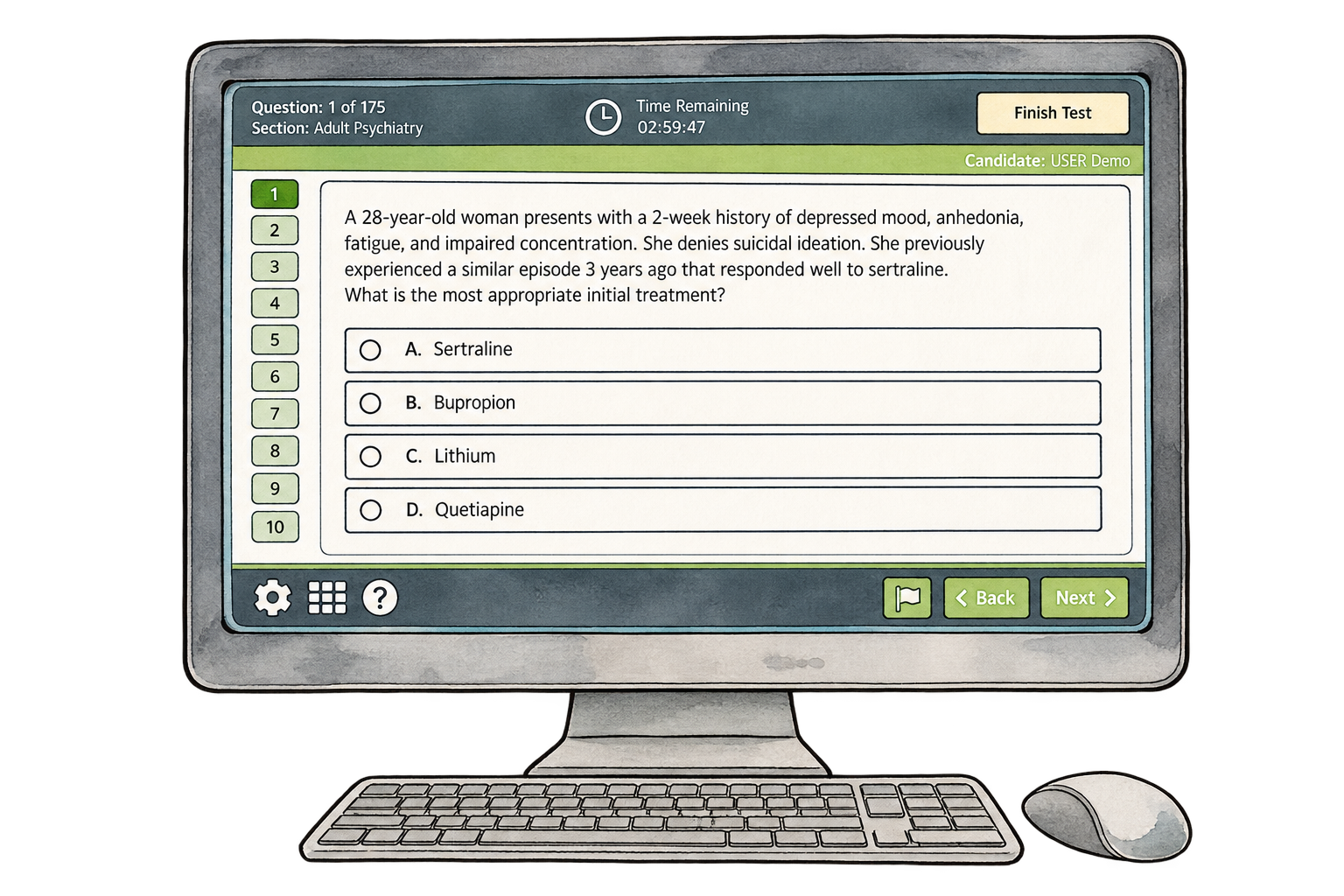
I recommend previewing it before your appointment—not to study content, but to make the interface familiar.
When I took the exam, those were the tools available to me, and they were useful.
Highlighting can help you keep track of the detail that changes the question.
Striking through answers can make it easier to compare the choices you have not eliminated.
Flagging gives you a way to move forward when a question needs another look.
Just don’t turn every tool into another task. You do not need to highlight half the stem or flag every answer you are not completely certain about.
How to Manage Your Time During the PMHNP Boards
With 210 minutes for 175 questions, you have an average of 72 seconds per question before accounting for breaks or review time. That average comes from ANCC’s published exam length and question count.
It is a pacing reference, not a requirement to finish each question in exactly 72 seconds.
Some questions will be straightforward. Others will take more thought.
My suggestion is to check your progress periodically rather than watch the clock after every answer. If you are spending several minutes on a single item, consider whether another reread is actually helping.
Choose the best answer you can support, flag it when appropriate, and keep moving.
ANCC does not penalize guessing, so answer every question.
What About Changing Answers?
I would not use an absolute rule such as “never change your first answer.”
Instead, ask why you are changing it.
Did you notice a symptom you missed? Misread the question? Remember a relevant contraindication?
Those are reasons to reconsider.
Feeling uncomfortable with uncertainty is not, by itself, new evidence that your original answer was wrong.
What If You Start Feeling Overwhelmed?
One difficult question does not tell you how the entire exam is going.

Try to keep the task small: understand this question, choose an answer, and move to the next one.
My suggestion is to pause briefly when you notice that you are rereading without taking anything in. Put your feet on the floor, release the tension in your shoulders, and give yourself a moment before returning to the screen.
You do not need to feel perfectly confident to continue.
I go into this more in my post on PMHNP test anxiety and what helped me before the ANCC exam.
What If There Is a Computer Problem or Another Disruption?
Tell the testing staff immediately rather than trying to work around it silently.
ANCC requires problems affecting exam performance to be reported to staff before you leave the center.
If the screen becomes unresponsive or something is interfering with your ability to test, raise your hand and ask for assistance. Ask how the problem will be documented and whether you need to follow up afterward.
You are not being difficult by reporting an actual problem.
When Do You Get Your ANCC PMHNP Exam Results?
After testing, ANCC says you will receive an email explaining how to access your result through Prometric’s online reporting portal.
When I took the exam, I found out that I had passed by the time I got back to my car.
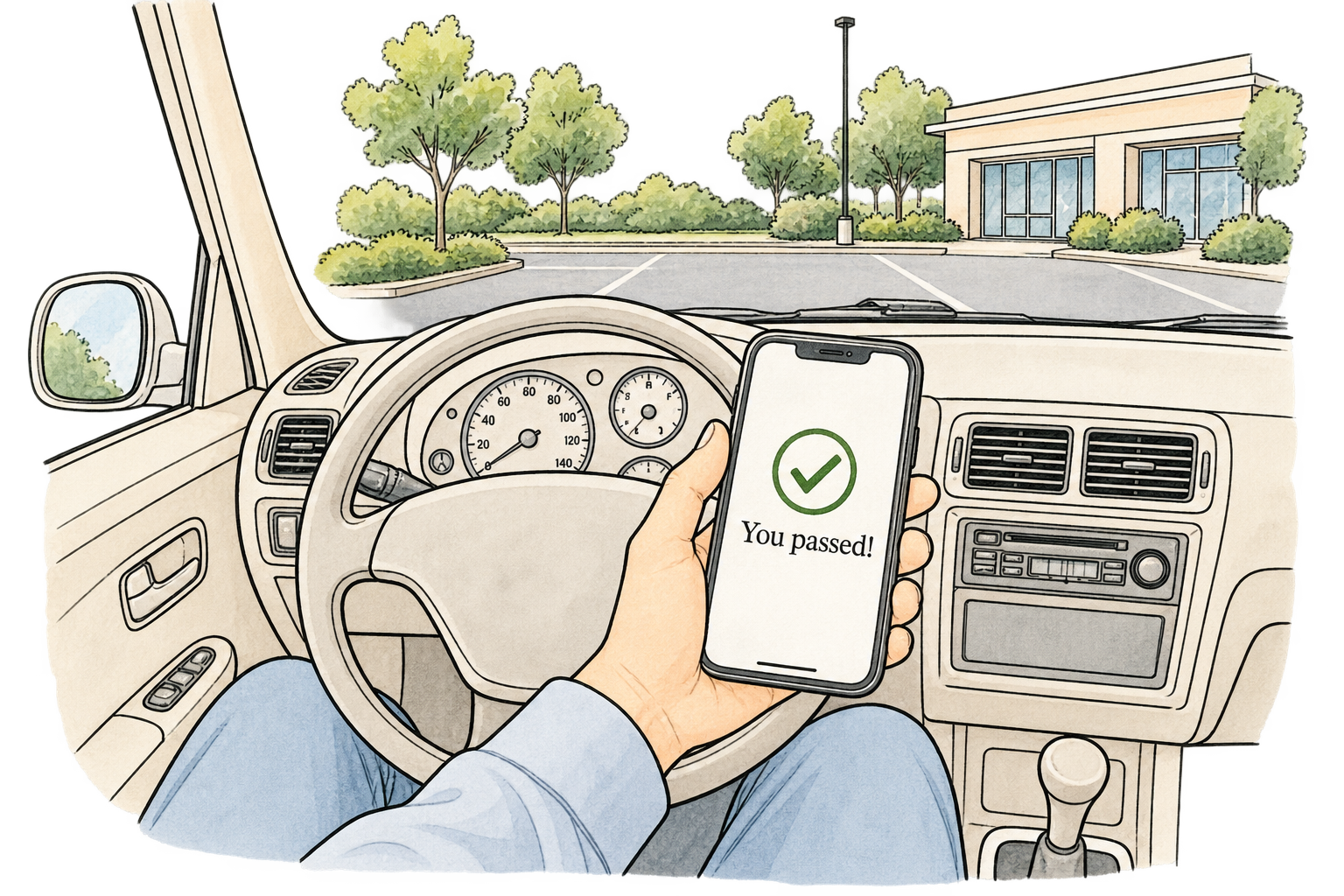
That was my experience—not a promise that everyone will receive access within the same number of minutes.
The ANCC Prometric page also provides a link to the score-report portal.
If you do not see the email, check your spam folder and follow the official instructions rather than trying to interpret the delay as a sign of your result.
Will You Receive a Detailed Score Breakdown?
ANCC reports a pass-or-fail result and provides content-area diagnostic information when a candidate does not pass. Do not expect the same detailed answer-by-answer analysis you receive from a practice question bank.
What Happens If You Do Not Pass?
ANCC permits retesting after 60 calendar days, with a maximum of three attempts in a 12-month period. A new retest application is required.
You do not need to rebuild your entire study plan while you are still sitting in the parking lot.
My guide to what happens if you fail the ANCC exam walks through the retake process and how to approach the next attempt.
Other Prometric Exam-Day Questions
Do I Need to Print My Authorization to Test?
Your ANCC Authorization to Test notice is not required at check-in and does not replace acceptable identification.
Keeping your appointment details accessible is still a good idea. Just don’t confuse the confirmation email with an identification document.
What If I Need to Reschedule?
Use the reschedule option on the official ANCC Prometric page and check the applicable timing and fee rules before submitting a change. Keep the new confirmation.
I would deal with a necessary change as soon as you know about it rather than waiting until the night before your exam.
What If the Testing Center Closes?
Prometric maintains a testing-center closure page and contacts candidates affected by unexpected closures. Check your email, phone messages, and the official notice before traveling.
Keep your contact information current so an important update does not go to an old email address.
Can I Discuss the Questions Afterward?
You can talk about how you felt and the general experience. You cannot reproduce or share confidential exam questions or answers. Prometric’s confidentiality rules apply after the exam, too.
A testing-center walkthrough is different from posting remembered questions in a study group.
My PMHNP Exam-Day Checklist
Before leaving home:
Check that your identification is in your bag and meets the current requirements.
Confirm the appointment time, address, and route.
Leave enough time to arrive early.
Eat something and choose comfortable clothing.
Review the instructions for any approved accommodations or permitted items.
Put away the last-minute study materials and focus on getting there.
You do not need to walk into Prometric carrying every resource you used to prepare.
You need the right identification, a clear plan for getting there, and enough room in your morning that one small inconvenience does not become a crisis.
One Last Thing
Preparing for the PMHNP boards involves a lot of content. Exam-day logistics should not become another subject you have to study.
Know where you are going. Bring the correct identification. Understand the break rules. Preview the software. Ask the staff when you need help.
Then bring your attention back to the next question.
You do not need to feel completely calm before you begin. You can feel nervous and still read carefully, think through the choices, and use what you have learned.
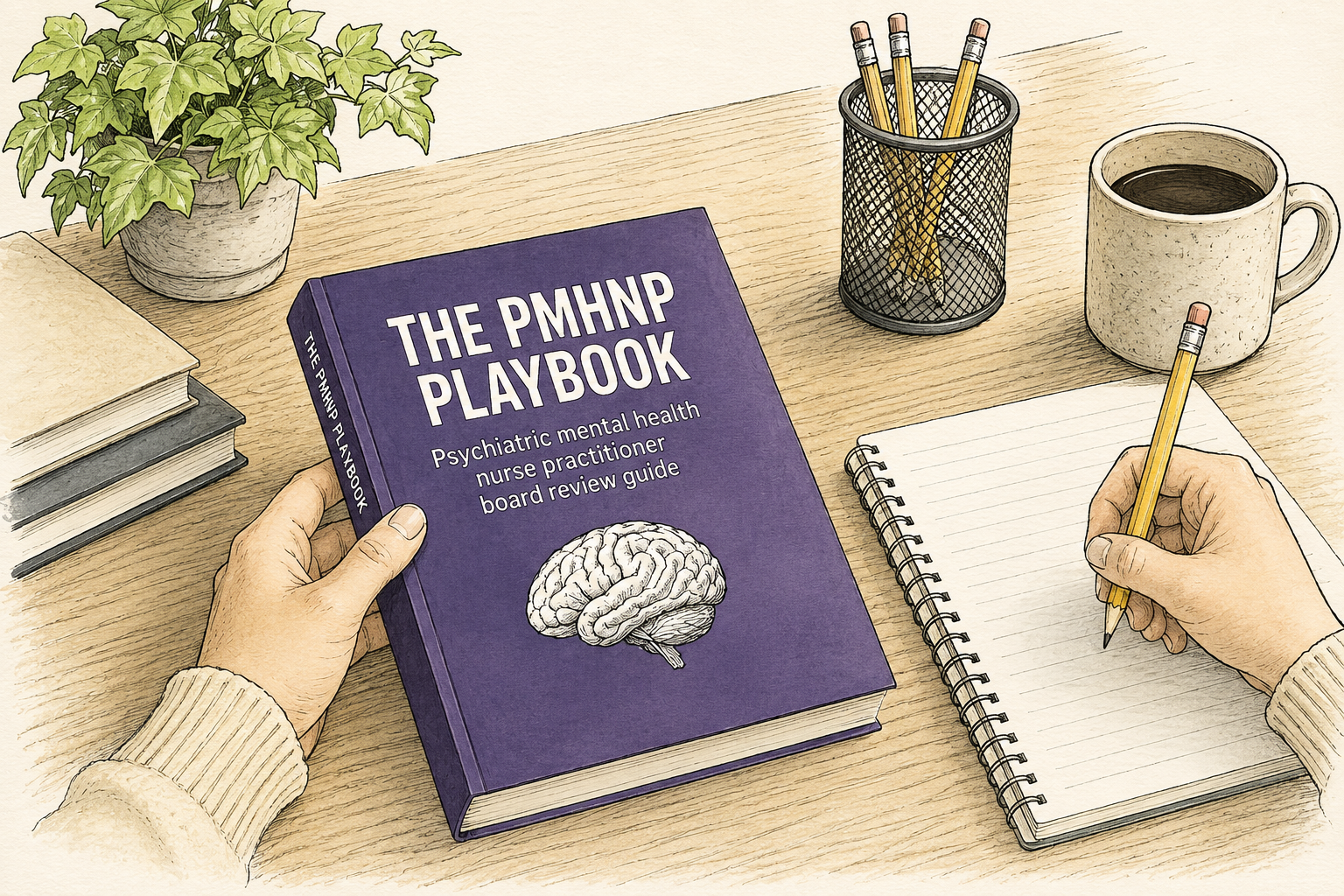
For the content side of preparation, The PMHNP Playbook brings high-yield psych NP board review, illustrations, and practice questions with rationales together in one resource.
Less Textbook, More Playbook.
Prefer digital? Buy the PDF edition
