What Happens If You Fail the ANCC PMHNP Exam? Retake Rules and What to Do Next

By Aislinn Ozawa Burns, MSN, PMHNP-BC
I passed the PMHNP boards on my first attempt, but I know people who did not.
Smart, clinically strong nurses can walk out of Prometric with a failing result and suddenly have to figure out something they probably hoped they would never need to Google:
What happens if you fail the ANCC PMHNP exam?
The short answer is that you can take it again.
ANCC currently allows you to retake the certification exam after 60 calendar days, with a maximum of three attempts in any 12-month period. You will need to submit another application, meet the eligibility requirements in effect at that time, pay the applicable retest fee, and take the entire exam again.
But knowing that you can retake it is only part of the answer.
You also need to understand your score report, figure out what actually went wrong, and use those 60 days differently than you used the weeks leading up to your first attempt.
That is what this guide is for.
First: What Happens Immediately After You Fail the ANCC PMHNP Exam?
You receive a pass or fail result from ANCC.
If you do not pass, your score report includes your scaled score along with diagnostic feedback for the major content areas on the exam. That feedback is there specifically to help you identify where your performance was weakest before another attempt.
Do not feel like you need to turn around and start studying again in the Prometric parking lot.
Save the score report.
Then go home.
You are probably going to replay questions in your head and remember every strange medication or obscure theory question you encountered. Try not to use those memories to diagnose what went wrong.
Your score report is more useful than your memory of the exam.
If you are still wondering what the actual Prometric experience is supposed to look like, my guide to what to expect at a Prometric testing center for the PMHNP exam walks through check-in, testing supplies, breaks, software, and results.
How Long Do You Have to Wait to Retake the ANCC PMHNP Exam?
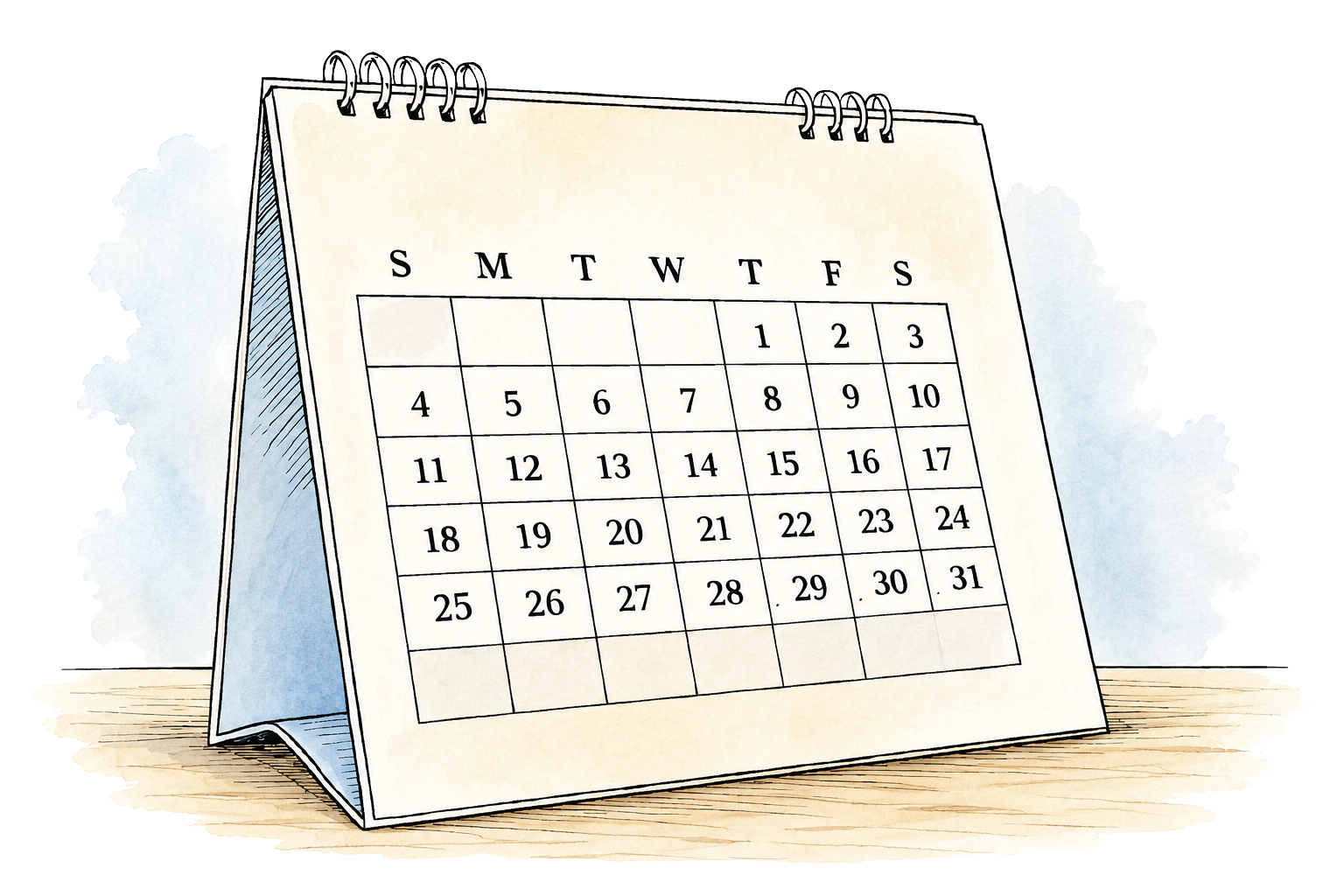
You must wait 60 calendar days from your previous testing date before you can take the ANCC certification exam again.
There is an important distinction here:
You do not have to wait 60 days to start the application process.
ANCC currently instructs candidates to wait five days after the examination before submitting an online retest application. Once the application is approved, you will receive another testing window. ANCC's faculty guidance states that retesting candidates receive a new 120-day testing window.
So the timeline is essentially:
Exam day → wait 5 days → submit retest application → receive authorization/testing window → earliest retest is 60 days after your previous exam
That is useful because it means you do not need to wait until day 60 to start dealing with the paperwork.
How Many Times Can You Take the ANCC PMHNP Exam?
ANCC allows a maximum of three exam attempts in any 12-month period.
So if you fail your first attempt:
Attempt 1
↓
Wait at least 60 days
Attempt 2
↓
Wait at least another 60 days if needed
Attempt 3
If you have already tested three times within a 12-month period, you cannot simply schedule attempt four another 60 days later. You have to wait until you are outside that 12-month limit.
Notice that ANCC says any 12-month period, not calendar year.
January 1 does not automatically reset your attempts.
Do You Have to Reapply After Failing the ANCC Exam?
Yes.
ANCC requires a new retest application.
The retest application is reviewed as a new application, which means you need to meet the eligibility requirements that are in effect when you reapply. ANCC may also request supporting documentation.
You also have to pay the applicable retest fees. Because fees can change, I would check ANCC directly when you are ready to submit rather than rely on an old screenshot or study-group post.
One Important 2026 Eligibility Change
Beginning January 1, 2026, candidates applying for an ANCC APRN certification—including retest applicants—must submit the application within five years of the degree or applicable post-graduate certificate conferral date.
For someone who just graduated and is retesting 60 days later, this probably changes nothing.
But if several years have passed since graduation and you are returning to certification after previous unsuccessful attempts, it matters.
Do You Have to Take the Entire PMHNP Exam Again?
Yes.
You retake the entire examination.
You cannot retake only the domain where your score was lowest or carry passing sections forward from your first attempt.
That is why your retake study plan still needs to include the whole PMHNP exam blueprint, even if most of your time is going toward weaker areas.
If you need a refresher on how the test is divided, start with my breakdown of the five ANCC PMHNP exam domains.
What Score Do You Need to Pass the ANCC PMHNP Exam?
ANCC scores certification exams on a scale from 0 to 500.
You need a scaled score of 350 or higher to pass.
This is where people understandably start doing math.
350 out of 500 looks like 70%.
But 350 does not mean you need exactly 70% of the questions correct.
Your raw score—the number of scored questions you answered correctly—is converted to a scaled score. ANCC uses that scaled score to determine whether you met the established passing standard.
So do not turn 350/500 into a simple percentage calculation.
If You Scored 349, Did You Fail by One Question?
Not necessarily.
A score of 349 is one scaled point below the passing score of 350.
That does not mean you missed passing by exactly one exam question.
Because ANCC converts the raw number of correct responses into a scaled score, you cannot look at a 349 and determine exactly how many additional questions would have produced a passing result.
That distinction matters because people often obsess over the idea that they were "one question away."
You might have been very close.
But the scaled score does not tell you the exact raw-question difference.
Is the ANCC Exam Graded on a Curve?
No.
ANCC describes its certification examinations as criterion-referenced.
That means your performance is evaluated against an established passing standard rather than against the performance of the other people taking the exam.
You are not competing with the person at the computer next to you.
There is no advantage to testing during an "easy" month or disadvantage to testing alongside an especially strong group of candidates.
Your job is to meet the passing standard.
What Does the ANCC Diagnostic Score Report Mean?
If you fail, ANCC gives you diagnostic feedback for the major content areas.
Each area receives one of three ratings:
Low
Your performance in that content area was below an acceptable level.
This should be one of your highest priorities before your next attempt.
Medium
Your performance was considered marginally acceptable, but ANCC still recommends additional study before retesting.
Do not interpret Medium as "I am completely fine here."
It means there is still room to improve.
High
Your performance was well above average in that content area.
You should still review it because you have to take the entire exam again, but it probably does not deserve the same study time as a Low area.
Do Not Study Every Domain Equally After Failing
This is one of the biggest changes I would make for a retake.
Your score report gave you information you did not have the first time.
Use it.
Imagine your results look something like this:
Scientific Foundation — Low
Advanced Practice Skills — Medium
Diagnosis and Treatment — Medium
Psychotherapy and Related Theories — High
Ethics, Legal Principles, and Cultural Care — High
It would make very little sense to spend the next two months dividing your study time evenly across all five.
Your first priority is Scientific Foundation.
Then strengthen the Medium domains.
Keep High domains fresh without allowing them to consume most of your study time.
Turn Your Weak Domain Into Specific Topics
"Study Scientific Foundation" is too vague to be useful.
Break it down.

If Scientific Foundation Was Weak
Go back to the foundational concepts that make psychopharmacology questions easier rather than memorizing another giant medication chart.
Review neurotransmitters for the PMHNP exam, including dopamine pathways, serotonin, norepinephrine, GABA, glutamate, acetylcholine, and histamine.
Then make sure you can distinguish pharmacokinetics from pharmacodynamics, including ADME, half-life, CYP450 interactions, receptor effects, potency, and efficacy.
If Advanced Practice Skills Was Weak
Focus on how you gather and interpret clinical information.
Review the mental status exam, especially terminology that is easy to mix up.
Go back through the structure of the psychiatric clinical interview.
And make sure you know the major PMHNP screening tools and what each one measures.
If Ethics and Legal Principles Was Weak
Do not just reread a chapter called "ethics."
Separate the concepts that get mixed together.
Review:
The more specific you make the weakness, the easier it becomes to fix.
Ask Why You Failed, Not Just What You Missed
Your content gaps matter.
But content may not be the entire reason.
Ask yourself what the actual exam felt like.
Did You Run Out of Time?
If you were rushing through the final 30 questions, your retake preparation needs timed practice.
Not more passive reading.
Did You Know the Material but Keep Changing Answers?
That points toward test-taking behavior and possibly anxiety.
Did Every Medication Question Feel Unfamiliar?
That is probably a content problem.
Were You Memorizing Facts but Struggling With Clinical Vignettes?
Then you need more application.
Instead of asking:
How can I study more?
ask:
What specifically prevented me from converting what I studied into correct answers?
Those lead to very different plans.
Take a Few Days Before You Start Again
The natural reaction after failing is to panic.
Buy three review courses.
Download four question banks.
Join five Facebook groups.
Study until 2 AM because now you feel behind.
I would not do that.
Give yourself a few days.
Then sit down with your score report when the initial disappointment is not quite as sharp.
You already have to wait 60 days before testing again. Starting your next study plan four hours after getting a failing result is unlikely to be the thing that determines whether you pass.
A deliberate plan will help you more than a panicked one.
Study Differently, Not Just More
If you failed after spending eight weeks reading the same review book every night, reading it for another eight weeks in exactly the same way may not solve the problem.
Change something.
If you mostly read the first time:
Add active recall.
Close the book and explain the concept out loud.
If you mostly watched videos:
Start answering questions.
If you answered hundreds of questions but ignored the rationales:
Slow down and analyze why each distractor is wrong.
If you knew facts but struggled with vignettes:
Practice identifying the clue in the stem that actually changes the answer.
If time was the problem:
Do timed sets.
If anxiety was the problem:
Practice questions under realistic conditions and address the anxiety itself.
The goal is not to accumulate the largest pile of PMHNP study materials.
It is to identify what did not work the first time and change it.
How to Review Practice Questions After a Failed Attempt
Your question bank becomes much more useful when you stop treating percentage correct as the only thing that matters.
For every question you miss, ask which type of error it was.
Knowledge Gap
You simply did not know the fact.
Example:
You forgot which dopamine pathway is associated with prolactin.
Go learn it.
Recognition Gap
You knew the concept, but you did not recognize how it appeared in the question.
Example:
You know what akathisia is, but the vignette described a patient who "cannot sit still" instead of using the word akathisia.
Practice clinical descriptions.
Reasoning Error
You knew the material but chose an answer that was less appropriate than another option.
Ask why.
Was another answer safer?
Was the question asking what to do first?
Did you treat before completing an assessment?
Reading Error
You missed a word such as:
first
best
most appropriate
except
immediate
Those mistakes are frustrating because more content review does not automatically fix them.
Slowing down does.
Anxiety or Second-Guessing Error
You originally chose the correct answer and changed it without a strong clinical reason.
That is worth tracking too.
After 100 questions, patterns start to become obvious.
Build Your 60-Day Retake Plan
Sixty days is roughly eight and a half weeks.
That is actually a useful amount of time.
You do not need to study at maximum intensity for all 60 days.
A reasonable retake structure might look like this:
Weeks 1–2: Diagnose the Problem
Review your score report.
Identify Low and Medium areas.
Go through missed practice questions from your first study period if you still have access to them.
Write down the specific concepts that keep showing up.
Weeks 3–5: Rebuild Weak Areas
Spend most of your study time on the weakest domains.
Use active recall and practice questions instead of rereading everything.
Weeks 6–7: Mix the Domains Again
Start doing broader question sets.
You do not want to become excellent at one weak domain while forgetting everything you previously knew.
Final Week: Consolidate
Review recurring mistakes.
Do timed questions.
Revisit your highest-yield notes.
Do not turn the final three days into another giant cram session.
If you want a more detailed structure, my 8-week PMHNP study plan can easily be adapted for a retake by giving extra time to the domains marked Low or Medium on your score report.
What If Test Anxiety Contributed to Failing?

Take that seriously.
If anxiety caused you to rush, reread questions without processing them, freeze on unfamiliar items, obsess over the clock, or repeatedly change answers, another 60 days of content review alone may not solve the problem.
Practice testing under timed conditions.
Make the environment slightly uncomfortable.
Sit at a desk instead of studying from bed.
Put your phone away.
Do a large block of questions without constantly checking answers.
And work on what you will actually do when your anxiety rises during the real exam.
My guide to PMHNP test anxiety covers the strategies that helped me before and during boards.
Do You Need 15 Continuing Education Hours Before Retesting?
You may still see older PMHNP board-prep posts mentioning additional continuing education requirements before an ANCC retest.
The current ANCC retest policy instructs unsuccessful candidates to wait five days before submitting a new application, meet the eligibility requirements in effect at that time, pay the applicable retest fees, and wait at least 60 days before testing again. It does not list a blanket 15-contact-hour requirement in the current retest instructions.
This is exactly why I would use ANCC itself for administrative rules rather than relying on an old Reddit thread or blog post.
Policies change.
How Common Is It to Fail the PMHNP Boards?
ANCC currently lists the PMHNP-BC pass rate at 82%, based on its 2025 certification data.
In other words, passing is more common than failing.
But failing is not some bizarre event that only happens to people who were completely unprepared.
An 82% pass rate also means there is a meaningful group of candidates who do not pass.
If you are in that group, your next step is not to decide what the result says about your intelligence.
Your next step is to figure out what needs to change before attempt two.
Should You Buy a New PMHNP Review Course After Failing?
Maybe.
But not automatically.
Before buying anything, ask:
What problem is the new resource solving?
If your first resource was missing important content, then another resource may make sense.
If your real problem was that you did not finish the resource you already had, buying three more probably will not help.
If your issue was applying concepts to clinical scenarios, look for more practice questions.
If your score report showed one specific weak area, find a resource that explains that area better.
Do not confuse having more study materials with having a better study plan.
For a focused high-yield review, The PMHNP Playbook is organized around the content you actually need to connect for the ANCC exam rather than requiring you to piece together dozens of separate resources.
What If You Fail the ANCC PMHNP Exam Three Times?
ANCC limits candidates to three attempts within any 12-month period.
If you have used all three attempts, you need to wait until another attempt would fall outside that 12-month limit before testing again. You will still need to submit another application and meet the eligibility requirements in effect at that time.
At that point, I would not simply repeat the same study process for a fourth time.
Something needs to change substantially.
Look at:
Whether the same domains remain weak
Whether test anxiety is significantly affecting performance
Whether timing is a problem
Whether you are relying too heavily on passive studying
Whether you need structured tutoring or a different review format
Whether you are actually completing enough practice questions under exam-like conditions
Three attempts give you a lot of data.
Use it.
Frequently Asked Questions About Failing the ANCC PMHNP Exam
How Soon Can I Retake the ANCC PMHNP Exam?
You can retake the exam 60 calendar days after your previous testing date. ANCC says to wait five days after testing before submitting the online retest application.
How Many Times Can I Take the PMHNP Boards?
ANCC allows no more than three attempts in any 12-month period.
What Score Do I Need to Pass?
You need a scaled score of 350 or higher out of 500.
Does 350 Out of 500 Mean I Need 70% Correct?
No.
ANCC converts your raw number of correct responses into a scaled score. A scaled score of 350 is the passing standard, but it should not be interpreted as simply answering 70% of the exam correctly.
If I Got a 349, Was I One Question Away?
You were one scaled point below the passing score.
You cannot determine from the scaled score that you were exactly one question away because the raw score is converted before being reported.
Do I Have to Retake the Entire Exam?
Yes.
ANCC requires candidates to retake the entire certification examination.
Will I Get Feedback About What I Did Poorly On?
Yes.
Candidates who do not pass receive diagnostic feedback showing Low, Medium, or High performance across the exam's major content areas.
Do I Have to Pay Again?
Yes.
A new retest application and applicable retest fees are required. Check ANCC for the current amount because fees can change.
Is the PMHNP Exam Graded on a Curve?
No.
ANCC uses a criterion-referenced scoring system. Your result is based on whether you meet the established passing standard, not how other candidates perform.
What Is the PMHNP-BC Pass Rate?
ANCC currently lists an 82% pass rate for PMHNP-BC based on 2025 certification data.
The Takeaway
Failing the ANCC PMHNP exam is disappointing.
But after the initial disappointment, the situation becomes fairly concrete.
You have a score report.
You have at least 60 days.
You know what the testing environment feels like.
You know which domains were weaker.
And you have another attempt.
Do not automatically restart your first study plan from page one.
Use the information you have now that you did not have before.
Identify what went wrong.
Target the weak areas.
Change the study method where necessary.
Practice applying the material instead of just rereading it.
And when you walk back into Prometric, it will not be your first time anymore.
That matters.
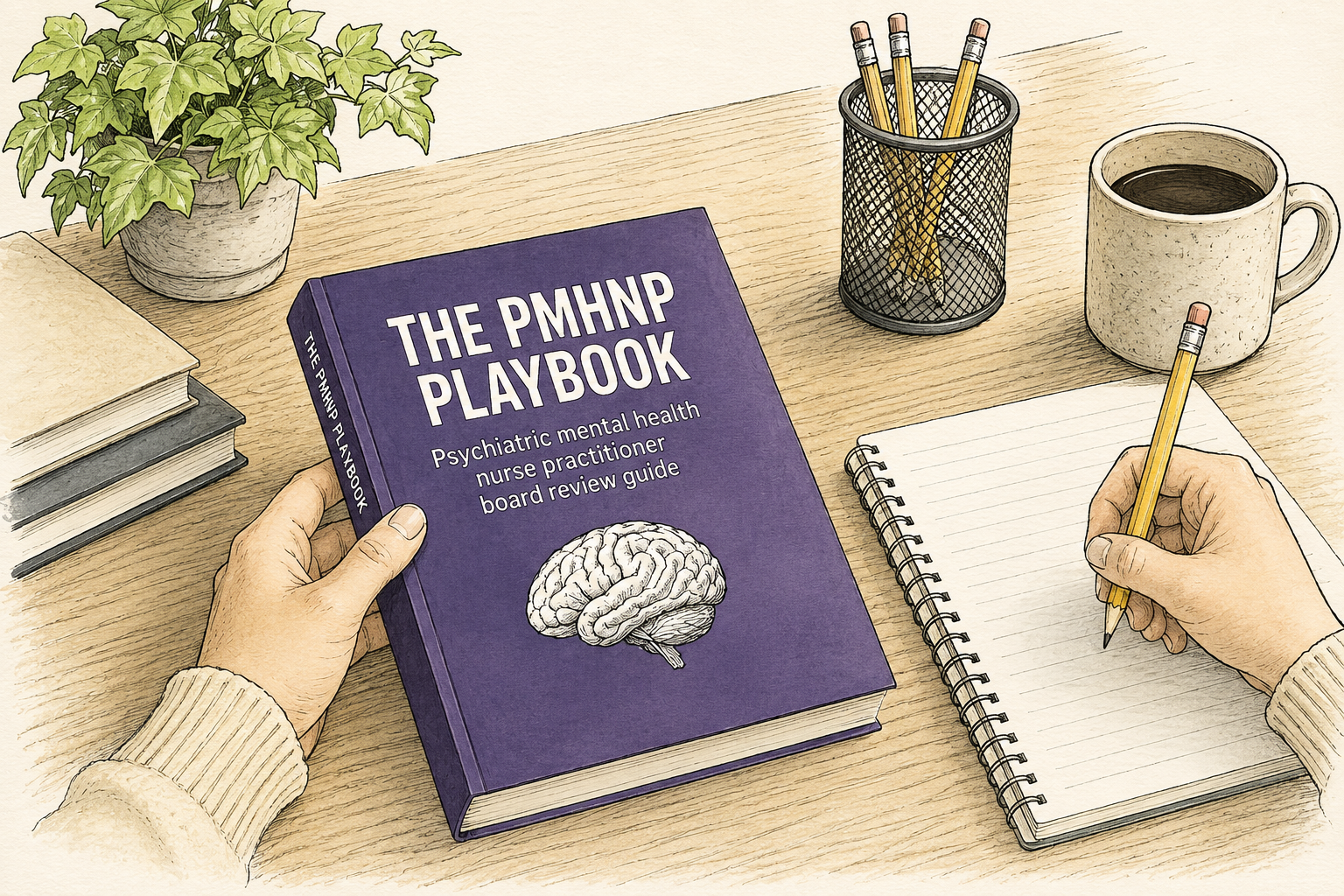
If you want a more structured way to review the material before your next attempt, The PMHNP Playbook was built for exactly that.
It brings the major ANCC topics together in one place, including psychopharmacology, neurotransmitters, assessment, diagnosis, treatment, psychotherapy, legal and ethical concepts, and board-style practice questions with rationales.
The goal is not to give you another giant textbook to work through. It is to help you focus on the high-yield concepts, see how they connect, and spend more time practicing the kind of reasoning the PMHNP boards actually require.
Less Textbook, More Playbook.
Prefer digital? Buy the PDF edition
