By Aislinn Ozawa Burns, MSN, PMHNP-BC
The Mental Status Exam comes up throughout the PMHNP boards, woven into clinical vignettes across multiple domains. It is also an area where precise terminology matters more than almost anywhere else on the exam. Getting the concepts right is one thing. Using the exact right term under pressure is another.

This post breaks down every component of the MSE, how to document it, and what the ANCC actually expects you to know.
What the MSE Is and Is Not
The MSE is your clinical snapshot of how a patient is functioning right now. It is not their story. That is what the psychiatric interview captures. The MSE is what you observe and record during the encounter itself.
It gives you and every other provider who reads your note a shared framework to describe symptoms, track changes over time, and communicate clearly. Two providers using precise MSE language should be able to read each other's notes and immediately understand what was observed.
How to Approach It
Do not think of the MSE as a checklist you run through at the end of the encounter. Think of it as a continuous scan that happens throughout the interview.
You are moving from the outside in. How does the patient look? How are they speaking? How are their thoughts organized? How aware are they of their own situation? By the time the interview is over you have already collected most of your MSE data without stopping to formally assess anything.
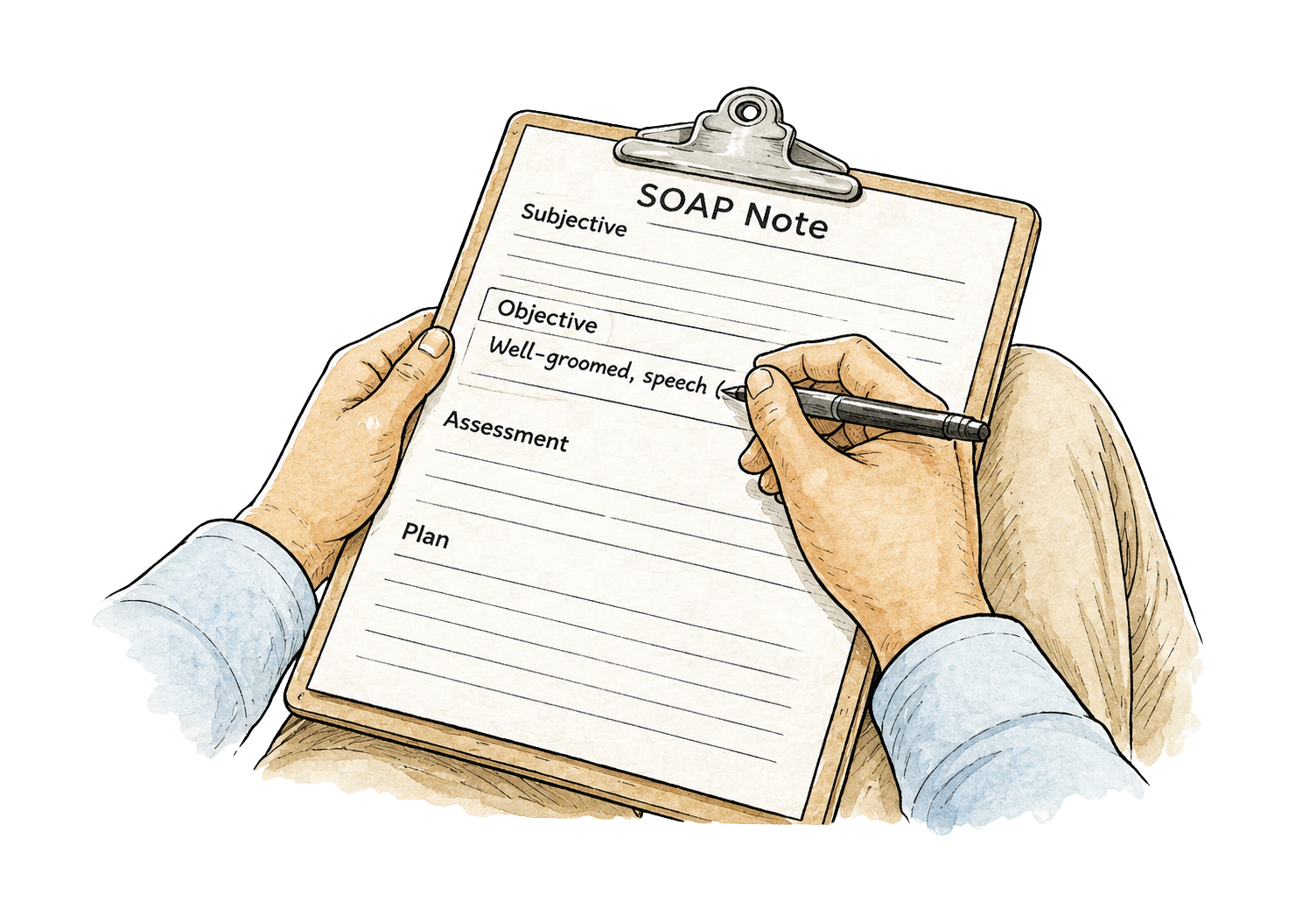
The MSE is documented in the objective section of your SOAP note. Mood is included there even though it is technically subjective, because it is being recorded within a standardized clinical framework.
The Ten Domains
Appearance and Behavior
Start with what you can see before the patient says a word. Note grooming, eye contact, and behavior. Is the patient calm, restless, guarded, or agitated?
Pay attention to signs of responding to internal stimuli such as talking to self, staring into space, or reacting to something you cannot perceive. These behaviors may suggest hallucinations or psychosis even when the patient does not report them directly.
Speech
Listen to how the patient speaks, not just what they say. Note rate, volume, and tone.
Pressured speech is rapid and difficult to interrupt and is commonly associated with mania.
Monotone speech is flat and unchanging and is often seen in depression or schizophrenia.
Mood
Mood is the patient's reported emotional state. Document it in their own words whenever possible. "I feel empty" is more clinically meaningful than "depressed mood" written by the provider.
Affect
Affect is what you observe about the patient's emotional presentation such as their facial expressions and responsiveness. This is different from mood, which is what the patient tells you they feel.
The key terms to know:
Flat: no emotional expression at all
Blunted: very limited expression
Restricted: narrow range but still appropriate
Labile: rapid and exaggerated shifts
Incongruent: does not match the mood or situation
Thought Process
Thought process describes how thoughts are organized and flow. You are assessing the form of thinking, not the content.
Linear: logical, organized, goal-directed
Circumstantial: over-detailed but eventually reaches the point
Tangential: goes off topic and does not return
Flight of ideas: rapid, shifting topics that are still loosely connected
Loose associations: disorganized with no clear connections between ideas
Thought Content
Thought content is what the patient is actually thinking. This is where you document anything that signals psychiatric illness or safety risk.
Delusions: fixed false beliefs that persist despite evidence
Referential thinking: belief that neutral events are personally directed at them
Obsessions: recurrent intrusive thoughts
Paranoia: persistent mistrust or suspiciousness
Suicidal or homicidal ideation: always assess and document
Perception
Perception describes how the patient experiences the world through their senses. Because these experiences are internal, ask about them directly.
Auditory hallucinations: hearing voices or sounds that are not present
Visual hallucinations: seeing things that are not there
Illusions: misinterpretation of a real stimulus
Depersonalization: feeling detached from oneself
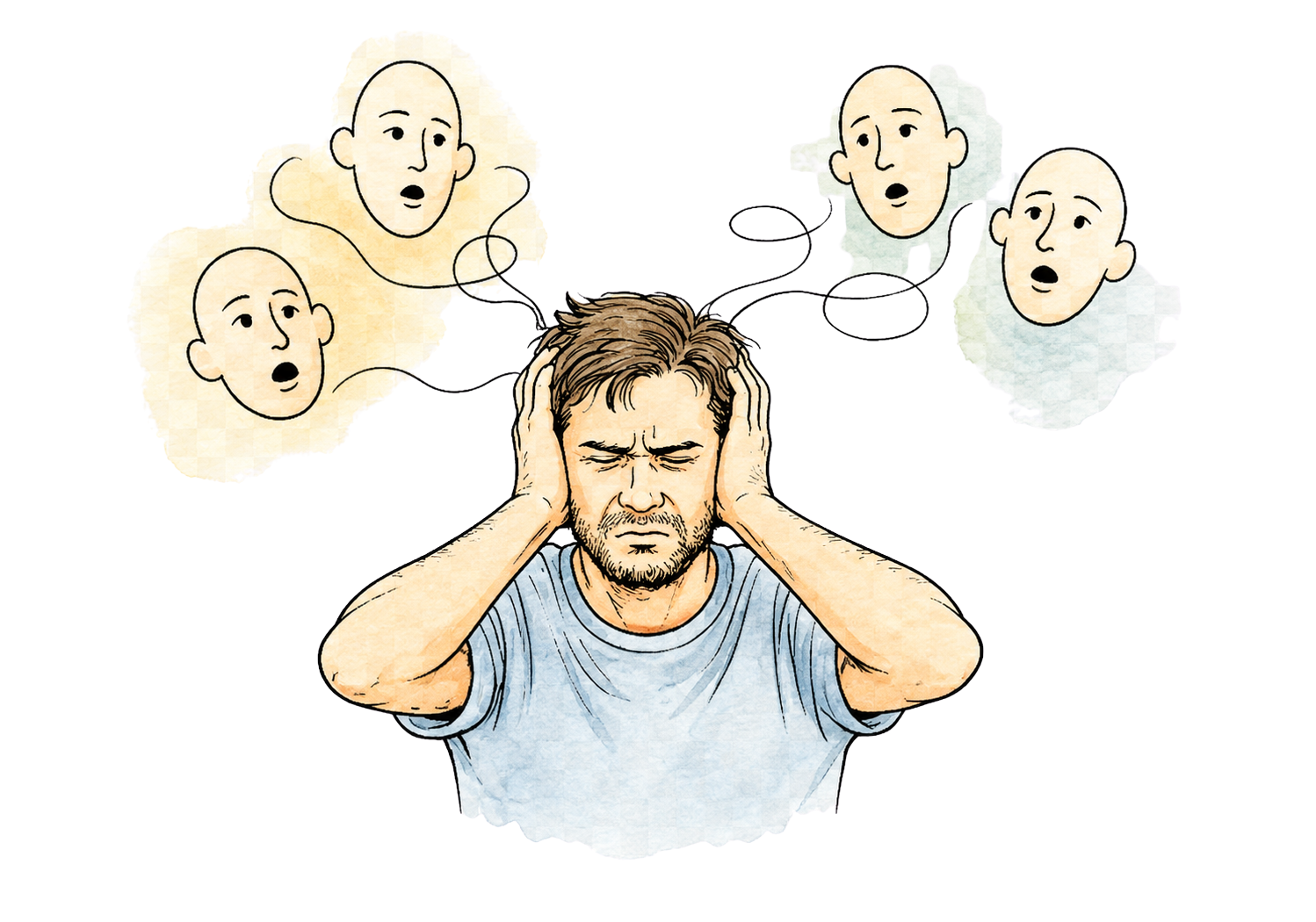
A simple screening question: "Have you ever seen or heard something others could not?"
Cognition
Cognition covers attention, memory, and orientation. Much of this can be assessed passively during the interview. Are they following the conversation? Can they stay on topic? Do they remember what was just discussed?
If impairment is suspected, brief formal screening tools can be used. Those are covered separately in the neurocognitive disorders content.
Insight
Insight reflects how well the patient understands their condition and need for treatment.
Good insight sounds like: "I know something is wrong and I need help."
Poor insight sounds like: "Everyone else is the problem."
Poor insight has real clinical implications because it directly affects treatment adherence.
Judgment
Judgment is the patient's ability to make safe and reasonable decisions. The classic board approach is a hypothetical scenario.
"What would you do if you smelled smoke in a crowded theater?"
A response like leaving and alerting others reflects good judgment. Ignoring it or responding in an unsafe way suggests impaired judgment.
What the Boards Actually Test
The ANCC is not going to ask you to list all ten MSE domains in order. What they will test is whether you can match a clinical description to the correct term.
Knowing the difference between tangential and circumstantial thinking. Knowing whether flat or blunted affect is more severe. Knowing that incongruent affect means the emotional presentation does not match what the patient is describing. Knowing that mood is reported and affect is observed.
The boards love to give you a clinical vignette and ask you to identify what MSE finding is being described. Precise language is everything here.
A Final Note
The MSE gets easier with practice. The first few times you document one it feels like you are running through a list. Over time it becomes the way you naturally observe and think about patients.
Start learning the language now. Translating what you observe into precise clinical terms is a skill that will serve you on boards and in practice every day after that.
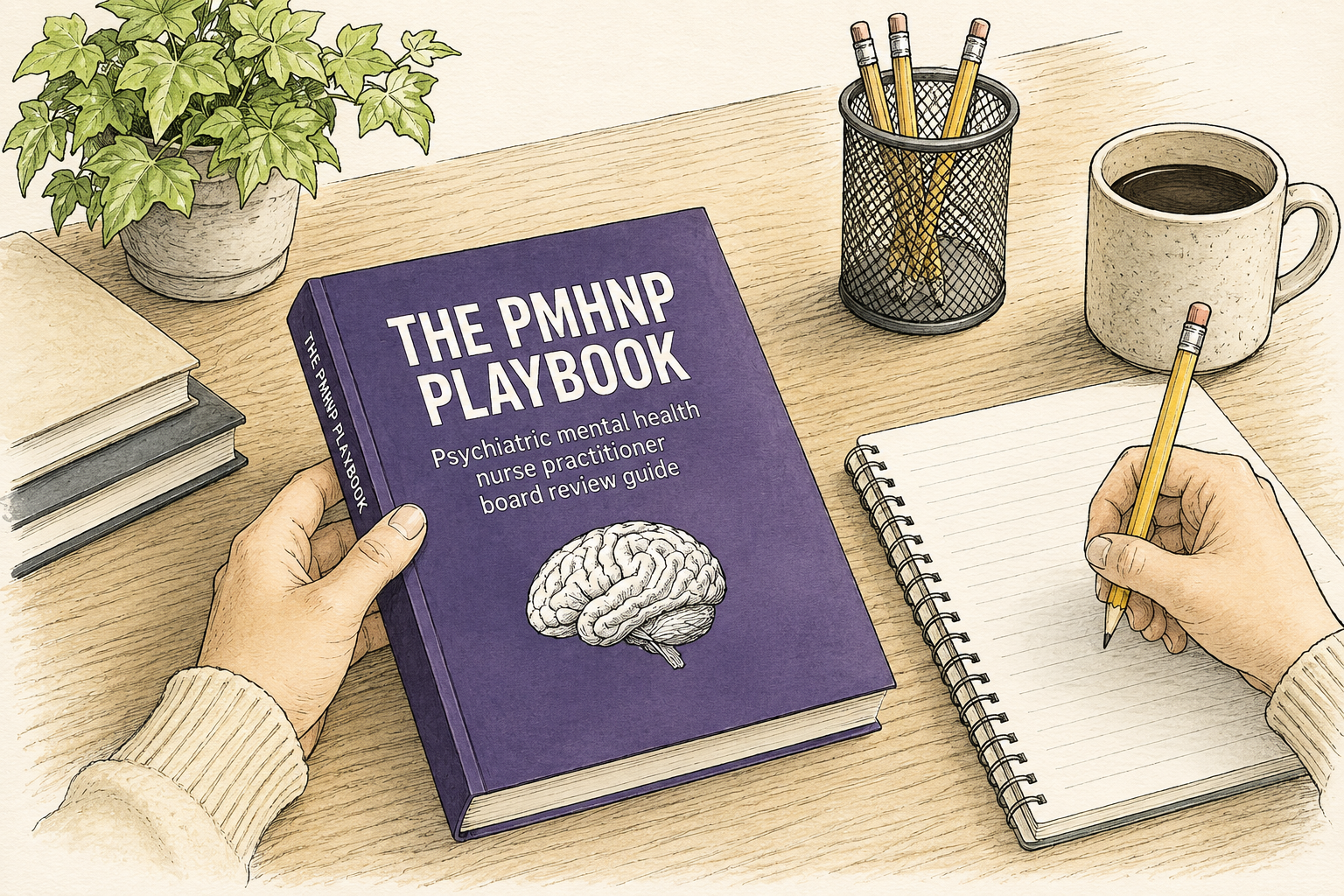
For more on the MSE including board-style practice questions and memory cues, check out The PMHNP Playbook.
For a broader look at how the MSE fits into the Advanced Practice Skills domain and the overall exam structure, start here.
Prefer digital? Buy the PDF edition
