By Aislinn Ozawa Burns, MSN, PMHNP-BC
One of the biggest shifts from RN to PMHNP is realizing there is no lab value or imaging study that hands you a diagnosis.
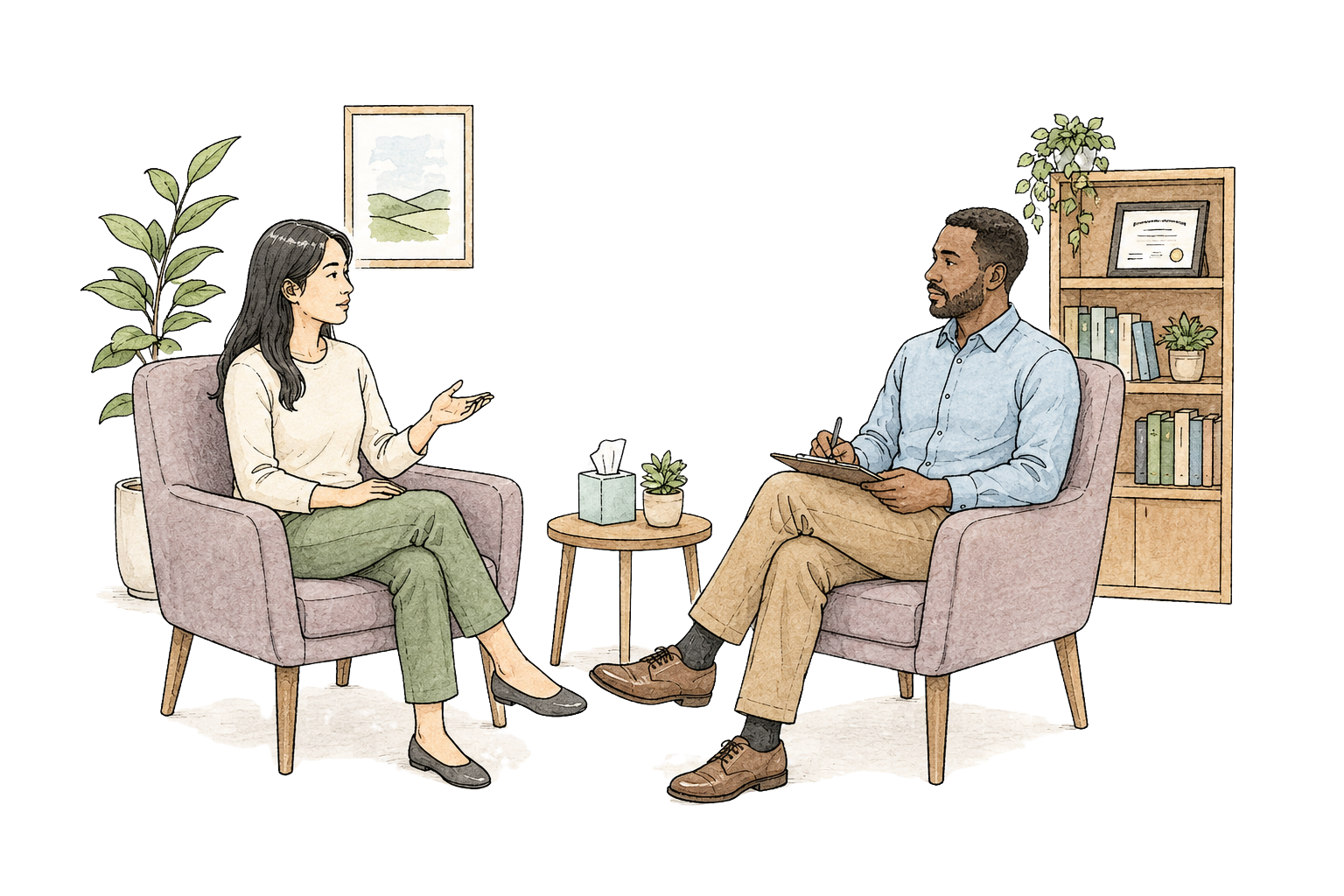
You have a conversation. And within that conversation, you are expected to build rapport, gather a thorough history, recognize subtle clinical clues, assess safety, and start forming a differential -- all while making the patient feel heard.
If that sounds like a lot, it is. But it gets easier once you stop thinking about the interview as a script and start thinking about it as a framework.
What the Psychiatric Interview Actually Is
The psychiatric clinical interview is the foundation of every evaluation you will do as a PMHNP. Before you diagnose anything or recommend any treatment, you need to understand the person in front of you. What brought them in today? How long have symptoms been present? How are those symptoms affecting their life?
Unlike most areas of medicine, psychiatry relies heavily on the interview itself. The information you gather is often your strongest diagnostic data.
Every question you ask should move you closer to answering two things: what is going on, and what does this patient need right now.
Stop Trying to Memorize a Script
The most common mistake PMHNP students make is trying to memorize the interview in the correct order.
Psychiatric interviews are not linear. A patient may bring up childhood trauma before explaining why they scheduled the appointment. Another may start talking about medication side effects before you have finished introducing yourself. Conversations move around and your job is to stay organized internally while staying present with the patient.
Focus on understanding the purpose behind the questions you are asking, not the order you are asking them in.
The Core Elements
Most psychiatric evaluations cover the same general territory regardless of how the conversation unfolds:
Chief complaint and reason for visit
History of present illness
Psychiatric history and previous treatment
Medical history
Family psychiatric history
Social history
Substance use history
Trauma history
Safety assessment
Mental status throughout the encounter
You do not need to move through these in sequence every time. What matters is that you gather enough information to understand the patient's symptoms and make safe clinical decisions.
You Are Observing the Entire Time
The interview is not just about what the patient says. It starts before they answer a single question.

Are they making eye contact? Does their speech feel pressured or slowed? Do they seem distracted by something you cannot see? Are they tearful, guarded, or oddly calm?
These observations feed directly into your Mental Status Exam. The interview and the MSE are not two separate events -- they happen simultaneously. By the time you sit down to document, you have already been collecting MSE data since the moment the patient walked in.
Safety Changes Everything
The psychiatric interview has a general structure, but safety always takes priority.

If a patient mentions suicidal ideation, expresses intent to harm someone else, or appears unable to care for themselves, the entire direction of the interview shifts. At that point the goal is not gathering more history. The goal is determining whether the patient is safe right now.
Recognizing those moments and knowing how to respond is one of the most important clinical skills you will develop as a PMHNP, and it is something the ANCC tests directly.
What the ANCC Is Actually Testing
Students often ask whether they need to memorize an interview template for the boards.
They do not.
The ANCC is testing your clinical reasoning, not your ability to recite a checklist. Expect questions that ask you to recognize when additional assessment is needed, identify information that shifts your differential, determine when safety takes priority over history gathering, and decide on the most appropriate next step.
They want to know how you think, not what you have memorized.
It Gets Easier
If your first psychiatric interview felt awkward and uncertain, that is completely normal. Every PMHNP student starts there.
With practice you will spend less time thinking about what question comes next and more time actually listening. You will start recognizing patterns, catching red flags earlier, and asking more purposeful follow-up questions. That is when the interview stops feeling like a checklist and starts feeling like a clinical skill.
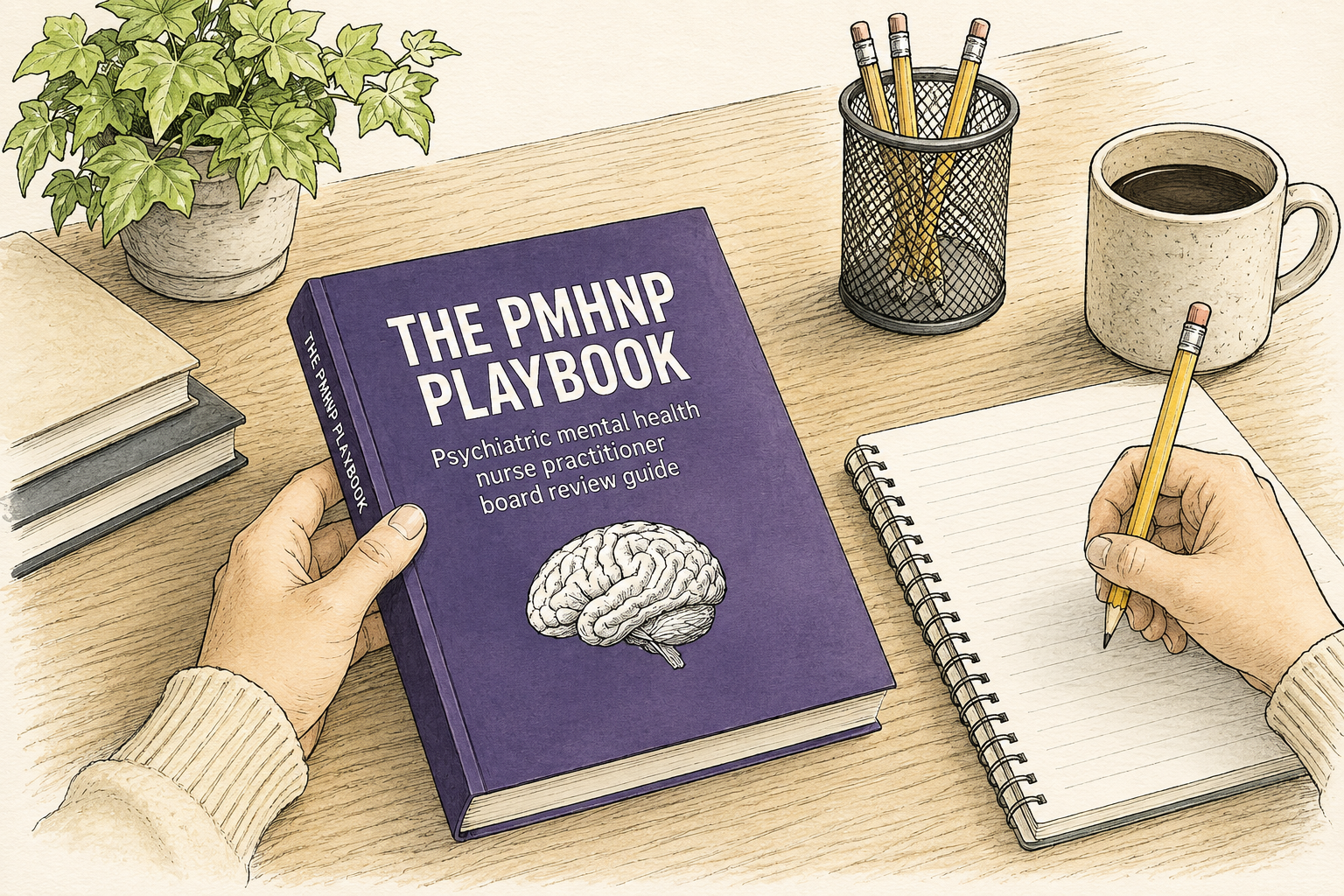
For a deeper dive into the psychiatric interview including a practical framework, risk assessment content, memory cues, and board-style practice questions, that material is covered in detail in The PMHNP Playbook.
Prefer digital? Buy the PDF edition
